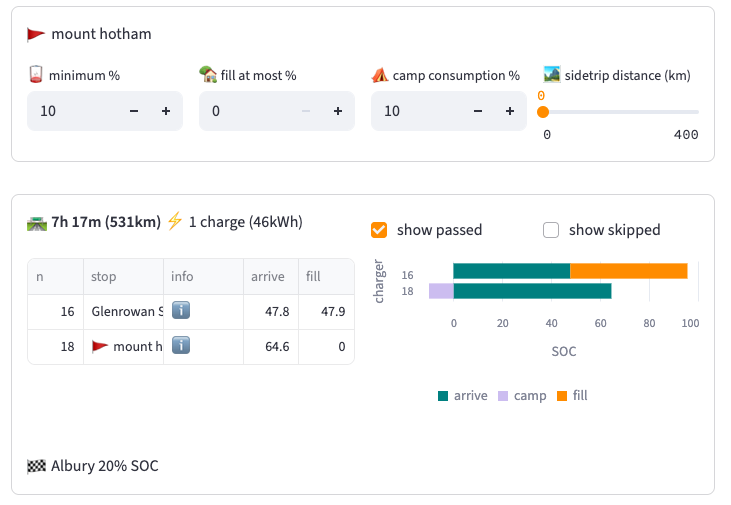
I’ve finally incorporated elevation changes in trippler resilient EV trip planning.
Elevation is a feature I’d always considered, but it never made it to the top of my priority list. Through field testing, I’d concluded that only net changes mattered – as regeneration on descent recovered almost all of what was lost to climbing – and net elevation changes were generally minor.
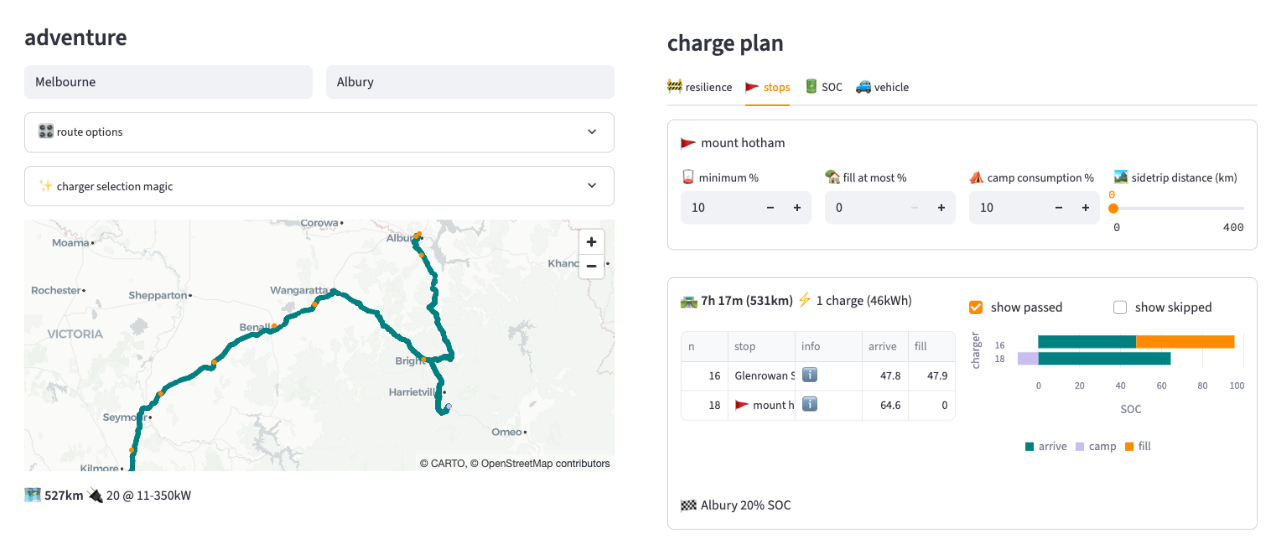
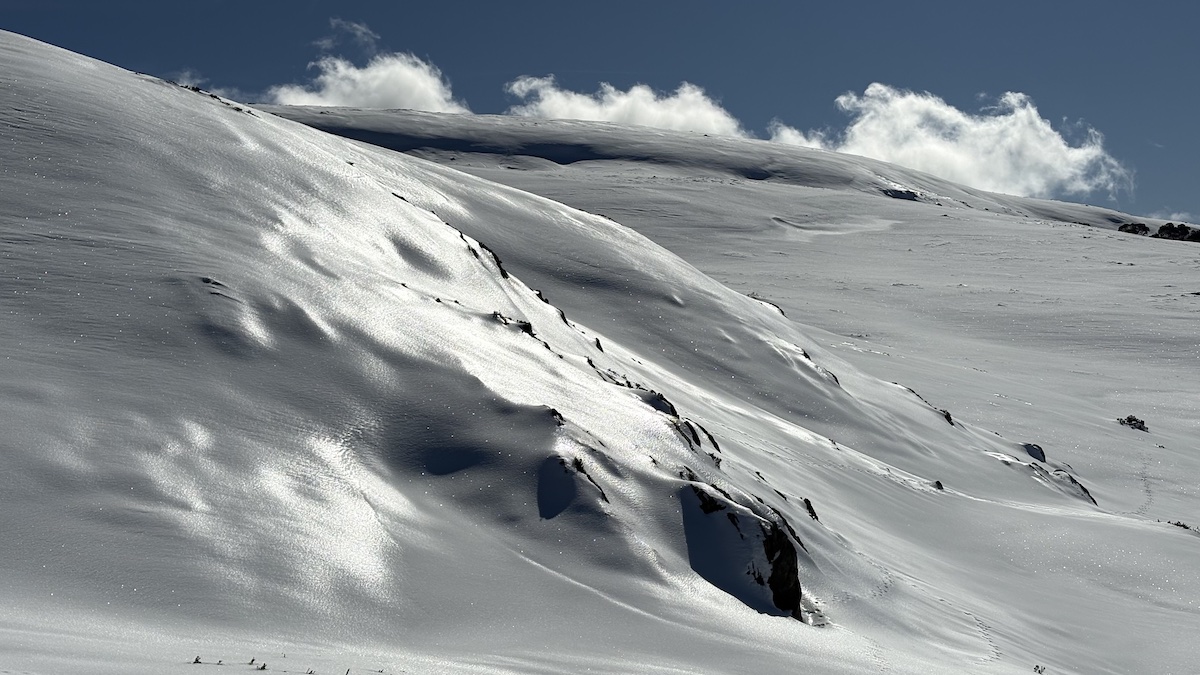
A recent camping trip to the Victorian alps changed my assessment of:
- the benefit, as the +10% SOC required for 1,600m elevation gain on the drive was relevant to planning an overnight camp at altitude, and
- the effort, when I realised openrouteservice elevation line was a shortcut to getting all required elevations.
With elevation for all trip locations (start, end, waypoints and chargers), only minor changes were required to the planner:
- Calculate a matrix of elevation changes, similar to the distance matrix,
- Add an input for gross vehicle weight (mass),
- Determine the SOC consumption (or generation) due to vehicle weight and elevation changes, considered against battery capacity, and
- Add this to the SOC consumption due to distances between trip locations.
And it just works!
Except for the neat edge case (which I will leave for now) of net regeneration on descent taking us above 100% SOC!
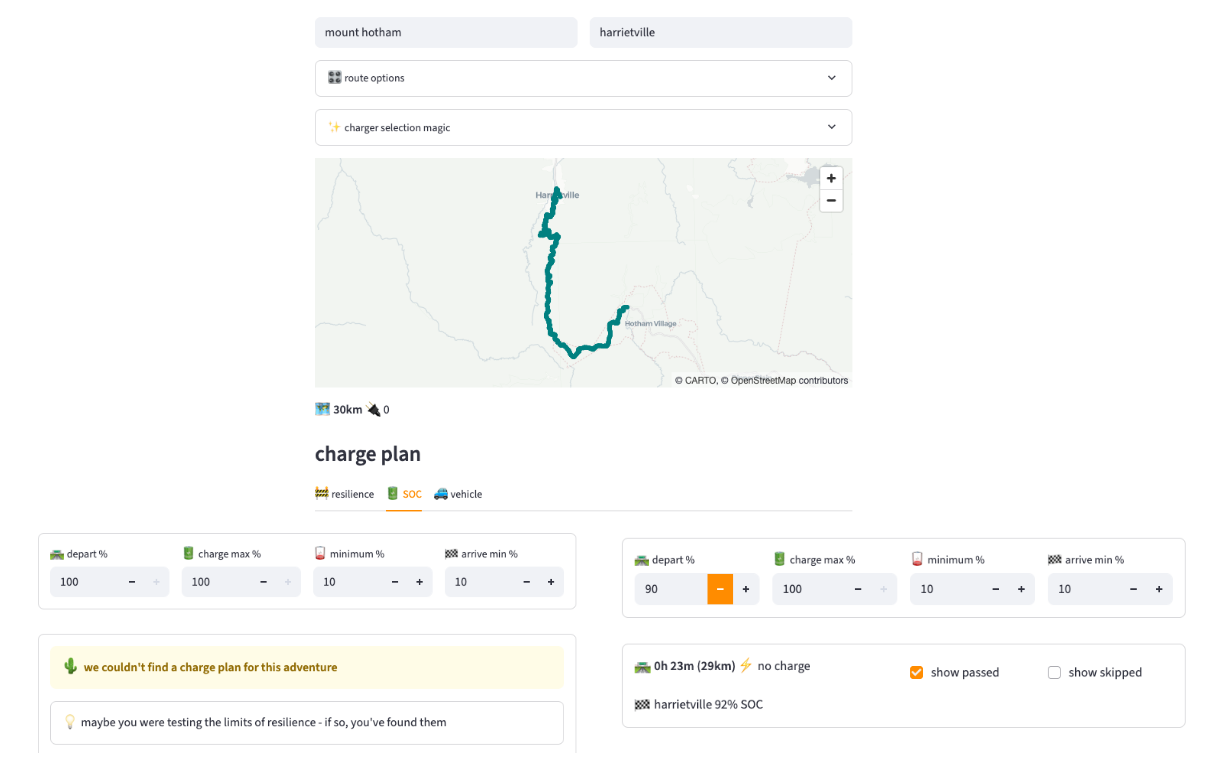
New camping features
New camping features were also easy to build as an extension to recent consumption moderation features. For stops en-route, trippler users can now also specify:
- SOC consumption in stationary “camp” or “utility” mode
- Total side-trip distance that would also consume SOC at the stop/camp